


Select A Store
Select Store
My Store:
Select A Store
Overview
Overview
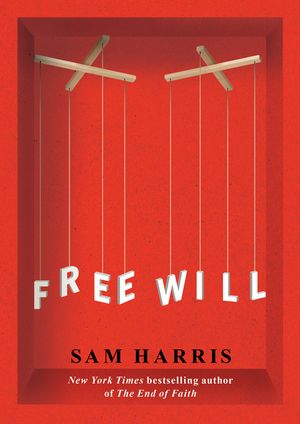
A BELIEF IN FREE WILL touches nearly everything that human beings value. It is difficult to think about law, politics, religion, public policy, intimate relationships, morality--as well as feelings of remorse or personal achievement--without first imagining that every person is the true source of his or her thoughts and actions. And yet the facts tell us that free will is an illusion. In this enlightening book, Sam Harris argues that this truth about the human mind does not undermine morality or diminish the importance of social and political freedom, but it can and should change the way we think about some of the most important questions in life.
- Format: TradePaperback
- Author: Harris, Sam
- ISBN: 9781451683400
- Condition: Used
- Dimensions: 7.80 x 0.50
- Number Of Pages: 96
- Publication Year: 2012
Customer Reviews
Rating Snapshot
5 ★
100%
4 ★
0%
3 ★
0%
2 ★
0%
1 ★
0%
1 Ratings
0
0% Would Recommend
0 Recommendations
Review Images
Sort by:
-
A Victory for Justice and Reason
Adrian H. - 4 years 11 months agoWhat if our concept of free will is nothing more than a compensatory illusion evolved as a result of our inability to consciously perceive time on such infinitesimal scales as those on which mental processes operate and propagated more out of fear and revulsion than of concern for scientific truth or value? This is precisely the theory that neuroscientist and philosopher Sam Harris argues for in his 85-page book, Free Will, published in 2012. If Harris is right and those mental processes we presently attribute to deliberation, planning, and conscious control are instead determined by genetic variation and environmental diversity, then our most fundamental economic and societal structures should be extensively transformed--from what work and levels of responsibility we can justly demand from employers and employees to how we compensate them for such service to what rules we can reasonably expect our citizens to observe to how we penalize those who violate such ordinances. Harris's intricate but lucid prose on this subject does much to illuminate the arguments promoting this consequential theory.
HPB Staff Review